
A holiday in Eforie Nord with children needs preparing differently from a trip for two, and a few good choices at the start make all the difference.
Eforie Nord has been, for decades, the resort where parents bring their children to the sea. The reasons are simple: beaches with shallow water at the shore, short distances, a seafront you can stroll along with a pushchair, and Constanța a quarter of an hour away for the days without sun. The guide below is written for families: which beach to choose, how to split your day, what to do when it rains, what to pack and what to watch out for.
Contents
Eforie Nord with children: why it is a good choice
- Sheltered beaches. In the south of the resort, the bays are closed off by breakwaters, and the water at the shore is usually calm and shallow.
- Everything is close. The beach, the seafront, the centre and the lake are within walking distance. You don’t spend your holiday in the car.
- A relaxed pace. It is not a club resort. In the evening, the music stops at a reasonable hour and the children can sleep.
- Salty air from two sides. The sea on one side, Lake Techirghiol on the other: the air laden with aerosols is one of the reasons sanatoriums were built here from the very beginning.
- Alternatives close at hand. The Dolphinarium, the Planetarium and the Aquarium in Constanța save any cloudy day.
Which beach to choose
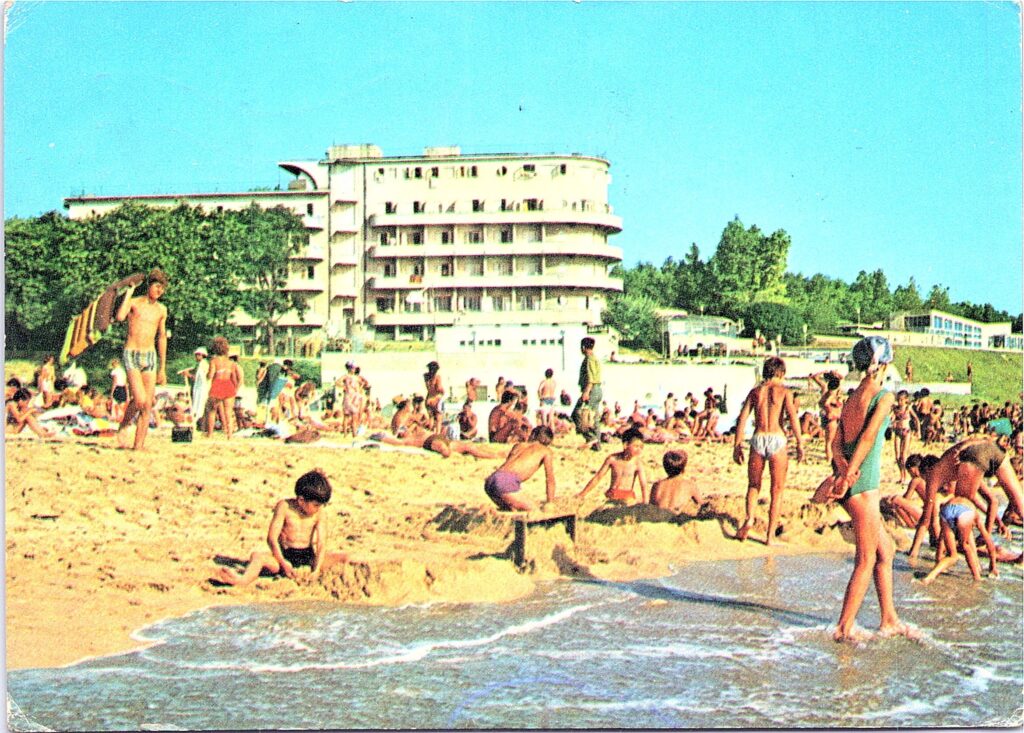
For small children, the best choice is the beaches in the southern part, below the cliff. Belona beach is the best known of them: the bay is protected by breakwaters, the entrance into the water is gentle, and in the afternoon the cliff casts shade over the sand.
The beaches in the north are wider and livelier, with more terraces and inflatable play areas, but also with bigger waves on windy days. They suit older children, who want activity.
Wherever you settle, two rules are not negotiable: children go in the water only with an adult beside them, and swimming is only in the area watched by lifeguards and only when the flag is not red.
The schedule of a successful day
With children, the beach day is split in two, with a long break in the middle. It is the schedule that all experienced families follow, and it spares the little ones from sunburn and sunstroke.
Morning: 8:00–11:00
An early breakfast, then straight to the beach. The sun is gentle, the sand doesn’t burn, the water is clear. It is the time for sandcastles and splashing about.
Lunch and nap: 11:30–16:30
Back to the hotel, a shower, lunch, an afternoon nap. If you stay close to the beach, the walk takes a few minutes, and the child falls asleep before getting the chance to protest.
Afternoon: 16:30–19:30
The second round on the beach. The water is at its warmest of the day, and the light is soft. Many children prefer this part of the day.
Evening
Dinner, a stroll along the seafront, an ice cream, a ride on the little train or a visit to the amusement park in the centre. At bedtime, everyone is tired in the good way.
What to do with the children besides the beach
The seafront
The promenade along the seafront is straight and wide, good for pushchairs, scooters and tricycles. In the morning it is almost empty. From up there, children can watch the ships waiting offshore to enter the port of Constanța, a spectacle that keeps them busy for longer than you would think.
The ship on the seafront
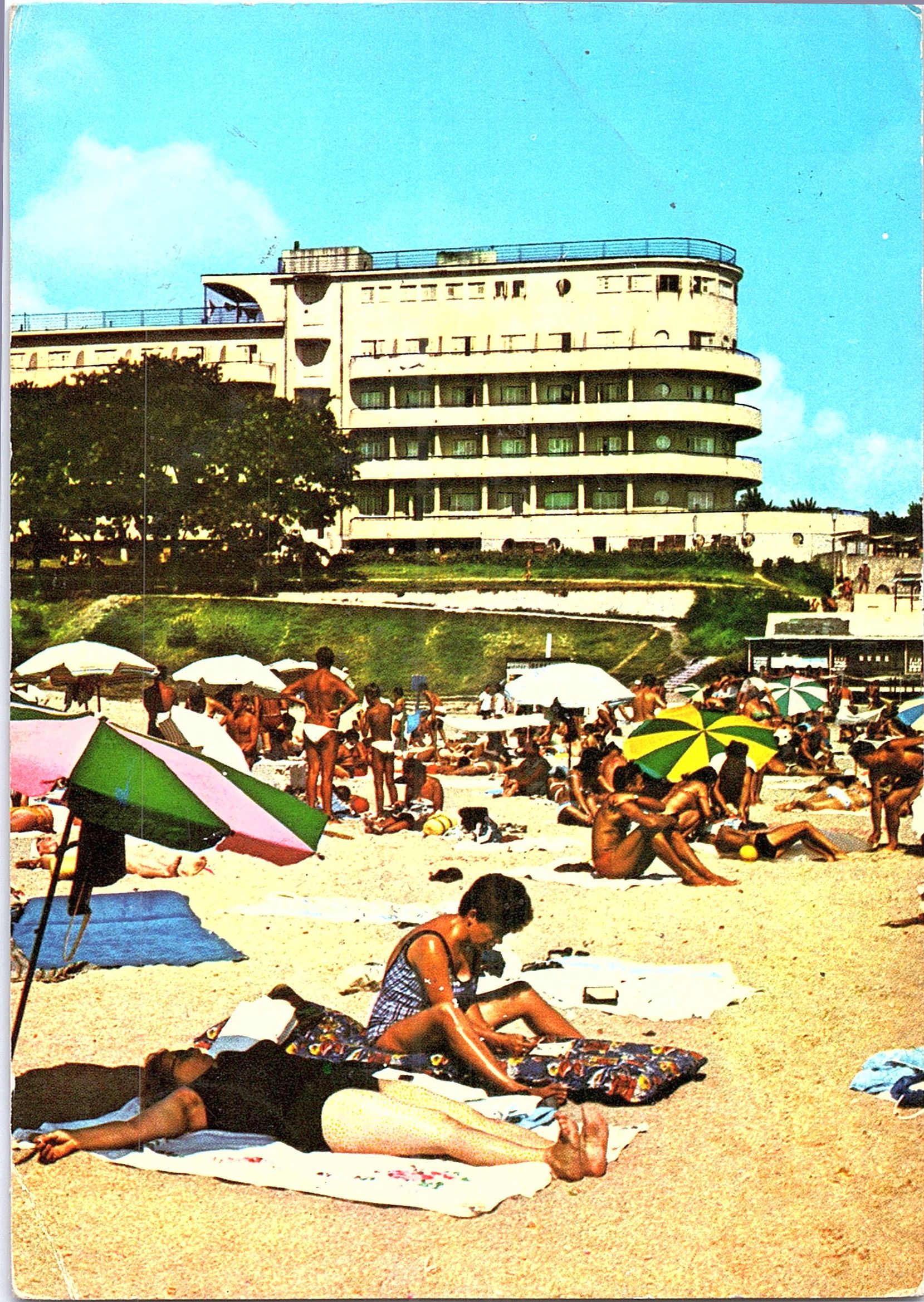
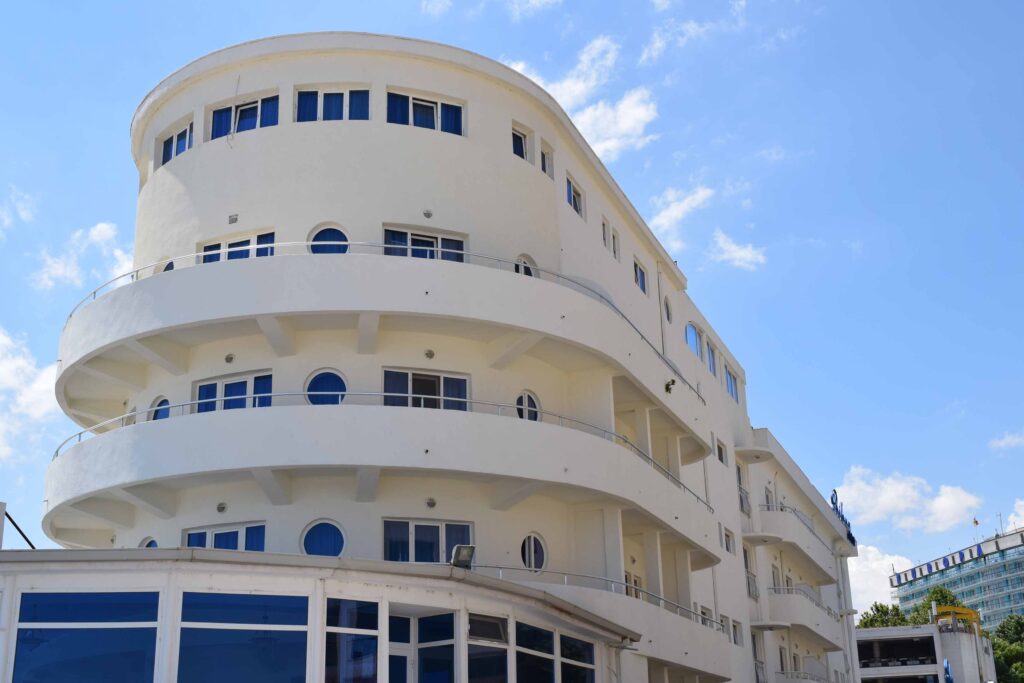
Children love the idea that they are sleeping in a hotel shaped like a ship. Hotel Belona has a rounded bow, balconies like decks and round windows, like portholes. You can turn it into a game: look together for the bow, the decks and the portholes, then compare the building with the old photographs on the History of the Place page. The explanation for the grown-ups is in the article on why it is called “the ship on the seafront”.
The amusement park and the playgrounds
In the centre of the resort, in the evening, the carousel, the bumper cars, the trampolines and the candy-floss stalls open. It is noisy and colourful, exactly as it should be.
Sunrise
If you have a child who wakes up at 5:30 anyway, turn the problem into an adventure: wrap yourselves in a blanket and go out on the seafront to watch the sun come up out of the sea.
Lake Techirghiol
For older children, the lake is an outdoor science lesson: why you float in its water, where the mud comes from, which birds live here. Proper mud baths are not for the little ones, except with the doctor’s approval; details in the guide to Lake Techirghiol.
What to do when it rains or the wind blows
Constanța is about 15 kilometres away and has at least a full day of things to do under a roof:
- The Dolphinarium: shows with dolphins and sea lions. In season, tickets run out quickly; come in good time.
- The Planetarium and the micro-reserve in the same complex, with birds and animals.
- The Aquarium, on the Casino seafront, with fish from the Black Sea and other seas.
- The Naval Museum, for little enthusiasts of ships and anchors.
- The Roman Mosaic Edifice, where children can see a mosaic almost two thousand years old.
On windy days without rain, the seafront in Eforie remains a lovely walk: the rough sea, with waves broken by the breakwaters, fascinates children. From a distance, of course.
Short trips suitable for children
- Techirghiol (about 5 km): the monastery with its little wooden church and the statue of Tekir with his donkey, which comes with a good legend to tell at bedtime.
- Tuzla (about 10 km): the lighthouse and the airfield, where you can watch small planes take off.
- Costinești (about 15 km): the shipwreck at the water’s edge, about which children ask a hundred questions.
- Agigea: the bridge over the Danube–Black Sea Canal and the lock, for those who love ships.
More ideas, with distances and tips, in the guide to attractions near Eforie Nord.
Beach safety
- Constant supervision. A child can drown in knee-deep water, within a few dozen seconds and without a sound. An adult stays within arm’s reach of a small child in the water at all times.
- The flags. Green, swimming allowed; yellow, caution; red, nobody goes into the water.
- Away from the breakwaters. Currents form next to them, and the rocks are slippery.
- The sun. Sunscreen with SPF 50, reapplied after every swim, a hat, a UV-protection T-shirt. Babies under one year are not exposed to direct sun.
- Drinking water. Children forget to drink when they play. Offer them water every half hour.
- A meeting point. Agree with your child on a clear landmark, for example the steps or the lifeguards’ tower, where to go if you get separated. A crowded beach looks the same in every direction.
- Your phone number, written on a bracelet or on a label attached to the swimsuit.
What to pack
For the beach
- sunscreen for children and after-sun lotion;
- wide-brimmed hats and UV-protection T-shirts;
- water shoes, for shells and hot sand;
- armbands or a swim vest, which do not replace supervision;
- bucket, spade, moulds;
- a small beach tent or umbrella, for babies’ naps;
- hooded towels and a change of dry clothes.
For the first-aid kit
- a thermometer and the child’s usual fever reducer;
- rehydration salts;
- cream for sunburn and insect bites;
- plasters and antiseptic;
- mosquito repellent, for the evenings by the lake.
For the evening
- a long-sleeved top and long trousers: the wind blows on the seafront;
- comfortable shoes for walking.
Where to stay with children
With children, three things matter more than anything else: the distance to the beach, breakfast and quiet at night.
Hotel Belona stands right on the seafront, at its southern end, more secluded than the centre. For families, the practical points are these:
- the beach is two or three minutes away, down the steps, so the lunch break and the afternoon nap don’t mean an expedition;
- breakfast is included and served as a buffet, so every child finds something to their taste;
- the building has a lift;
- parking is free, subject to availability;
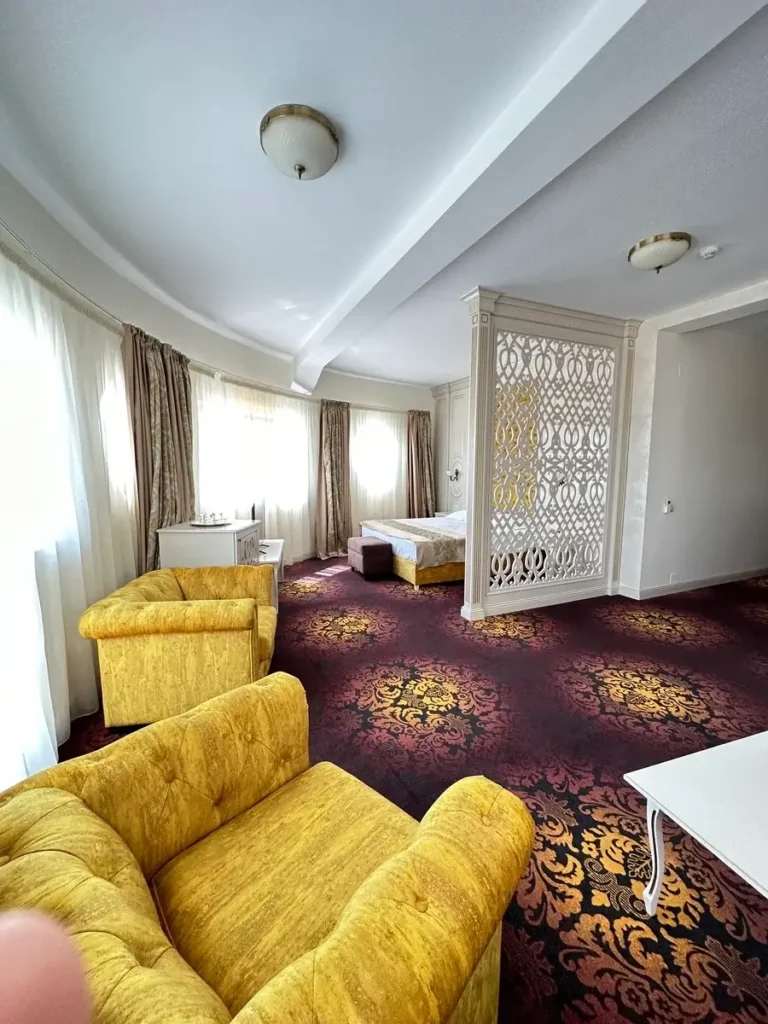
- there are double rooms, junior suites and an apartment, for families who need more space;
- check-in is from 18:00, and the room must be vacated by 12:00.
For room layouts and availability, call +40 21 555 25 70 or write to belona@avenuehotels.ro. Say from the start how many children you have and how old they are, so that you get the right recommendation.
When to come with children
For small children, the best periods are the end of June and the end of August, when the water is warm, but the sun and the crowds are gentler than at the height of the season. July and the first part of August have the warmest sea and the most activities, but also the busiest beaches. The beginning of September is quiet and still suitable for swimming, good for families with children who don’t go to school yet. We compared the months in the article on when to go to the seaside in Eforie Nord.
By age: what works and what doesn’t
Babies (under one year)
A seaside holiday with a baby is, in fact, a holiday in the shade. The beach very early or towards evening, under an umbrella or in a tent, thin cotton clothes, hydration on demand. Long walks along the seafront with the pushchair are the most pleasant part. Choose accommodation very close to the beach: you will make the trip often and in short bursts.
Toddlers (1–3 years)
The age of sand. A bucket and a spade replace any programme. The water attracts and frightens them at the same time; don’t force anything. The lunchtime nap is sacred, and the day split in two works best.
Preschoolers (3–6 years)
The real splashing begins, with armbands, at the water’s edge. In the evening they want the little train, the carousel and ice cream. It is the age at which a visit to the Dolphinarium remains the memory of the holiday.
School-age children (7–12 years)
They can learn to swim, they can go out on a pedalo with an adult and they start to be curious: why the lake is salty, why the hotel looks like a ship, what the wreck at Costinești is. Short trips become possible and enjoyable.
Teenagers
They need a little freedom and something to do: stand-up paddle, a bike ride to Eforie Sud, an evening in Mamaia or Vama Veche together with the family. Set clear rules and return times.
What little ones eat
At the seaside, children eat less at lunch and more in the evening, because of the heat. A few habits that help:
- a good breakfast, at the hotel, before the beach;
- fruit and water to hand, on the beach, instead of sweets;
- a light lunch, in the shade;
- fish with few bones, or fillets, for those trying it for the first time;
- caution with ice cream and food from the stalls on very hot days;
- bottled water for the very young.
The budget of a holiday with children: where the money goes
Without giving figures, which change from year to year, it is worth knowing what the money is spent on, so you have no surprises: sunbeds and an umbrella, if you don’t sit on a towel; parking, if the hotel doesn’t offer it; lunch and dinner; evening entertainment, where every carousel ride is paid for separately; tickets for the Dolphinarium and the Aquarium; beach toys bought on the spot, always more expensive than at home. Accommodation with breakfast and parking included takes two of these expenses out of the calculation.
Frequently asked questions
From what age can you take a child to the seaside?
This is a question for the paediatrician, who knows the child. In general, doctors recommend that small babies not be exposed to direct sun and stay in the shade, during the gentler hours of the day.
Which is the best beach in Eforie Nord for children?
The beaches in the south, sheltered by breakwaters, such as Belona beach, are the most sought after by families, for their calm water and gentle entrance.
What do you do with the children in Eforie Nord when it rains?
Go to Constanța, to the Dolphinarium, the Planetarium and the Aquarium. They are about 15 kilometres away and easily fill a whole day.
Is the sea warm enough for children?
In July and August, usually yes. In June and September the water can be colder, especially after windy days, when the currents bring water up from the depths to the shore.
Can you take a pushchair along the seafront?
Yes, the promenade is wide and straight. The way down to the beach is by steps, so a baby carrier or a light, foldable pushchair is more practical than a big one.
Are there mosquitoes?
In the evening, especially near the lake and after rain, yes. A repellent suited to the child’s age solves the problem.
The period photographs on this site come, for the most part, from the Andrei Ștomff Collection of the National Institute of Heritage and from the Fortepan archive; the source and licence of each image are given in its caption.