
The story of the place · on the seafront since 1933
Hotel Belona, the ship-shaped building on the Eforie seafront, has been in turn a sanatorium, a luxury hotel and a rest house. This is the history of Hotel Belona, told through the photographs that remain.
Step back in time ↓
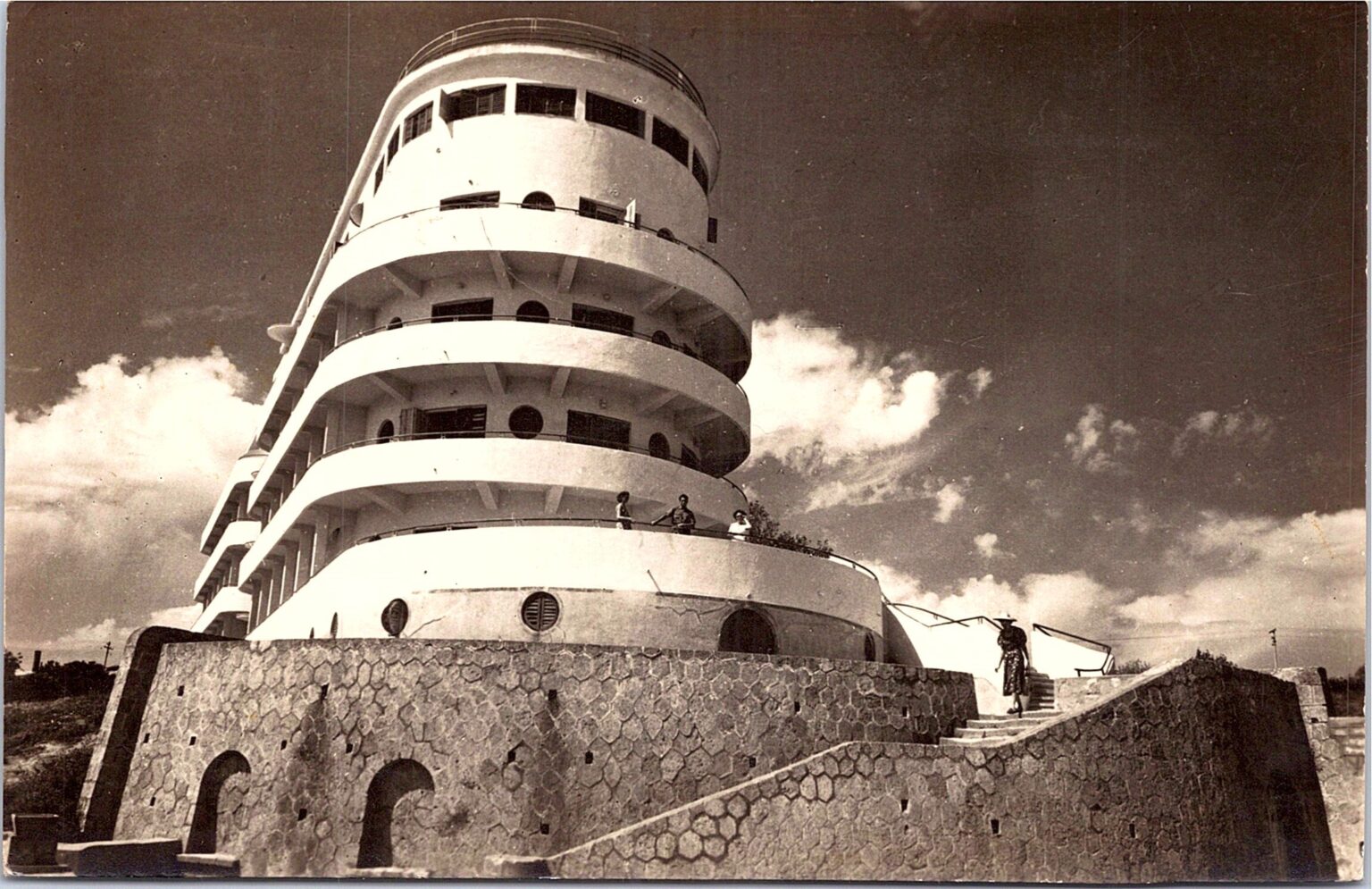
The bow seen from the beach. Postcard mailed in 1958 · Andrei Ștomff Collection / INP
Prologue · before the hotel
1894
In 1894, Eforia Spitalelor Civile, the board of Bucharest’s civil hospitals, bought a plot on the strip of land between Lake Techirghiol and the sea. Its seaside sanatorium opened here in 1899, and around it grew the resort that would bear its name: Eforie.
1930
Between 1930 and 1934, the seafront land of banker Aristide Blank was divided into plots following a plan by architect George Matei Cantacuzino. Horia Creangă and Henrieta Delavrancea-Gibory designed here too. The seafront became an experiment in Romanian modernism, and at its southern end a ship-shaped building would rise.
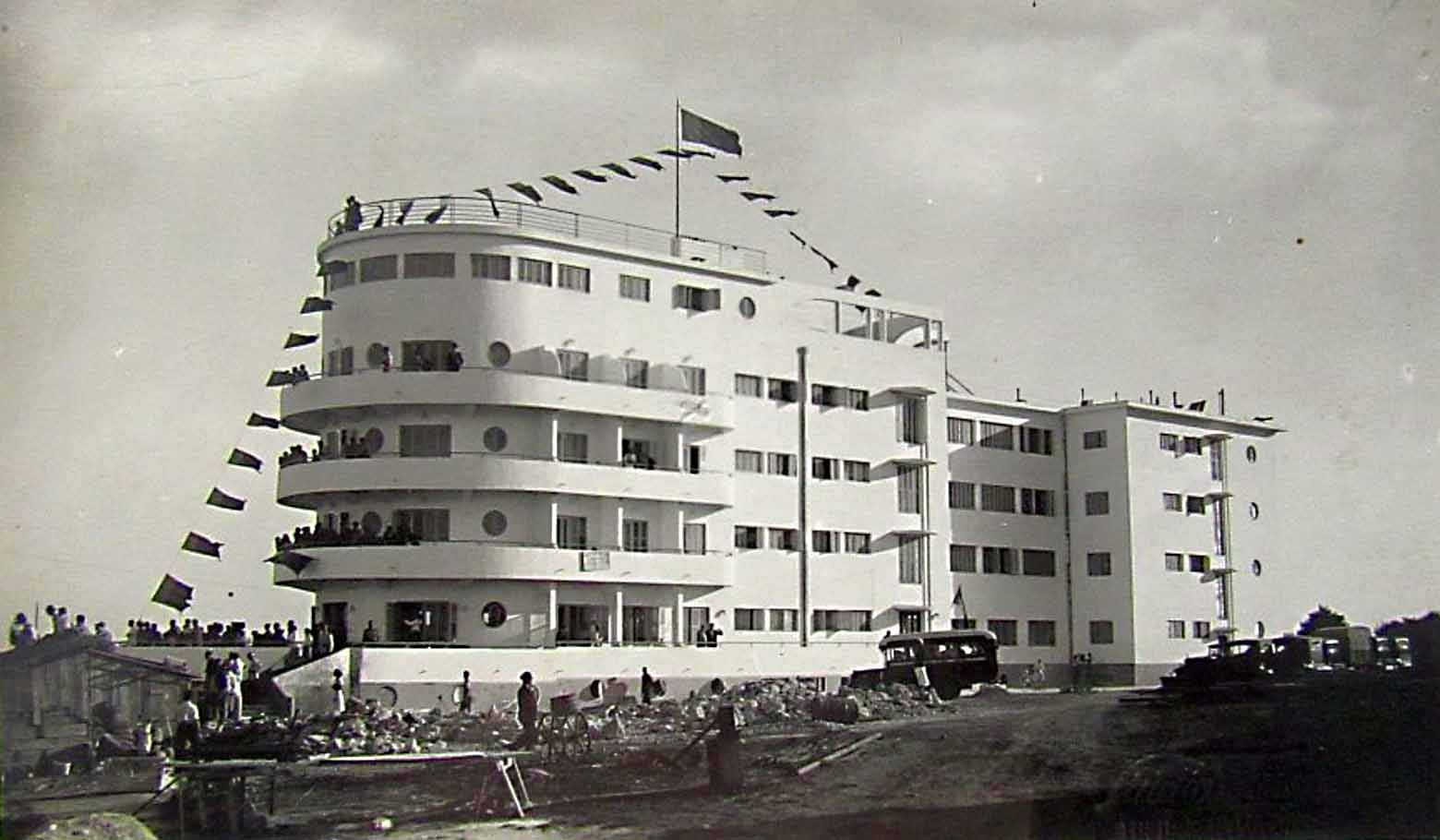
Hotel Bellona decked with flags, pre-war photograph · Emanoil Vasiliu Collection, via the National Institute of Heritage
22 October 1932 — August 1933
1933
On Saturday, 22 October 1932, the Society of Disabled War Veterans, led by Major M. Văgăunescu, laid the foundation stone of a seaside sanatorium at Techirghiol-Eforia. The plans were by architect Cantacuzino.
In August 1933 the building was inaugurated. The name comes from mythology: Bellona, the Roman goddess of war, protector of those wounded in battle. That is how it was explained at the inauguration itself, according to the newspaper Universul.
Spring 1934
1934
In March 1934, tenders were invited for the lease of the building and its restaurant. A month later, the Bucharest hotel company SARPEH decided to open a branch here. By summer, newspaper advertisements were already inviting guests to “Hotel Bellona”, in Eforia.
That same year, the Paris magazine L'Architecture d'aujourd'hui published its photograph and plan, noting that in Eforie a single architect had been able to build an entire beach: a few villas and a hotel.
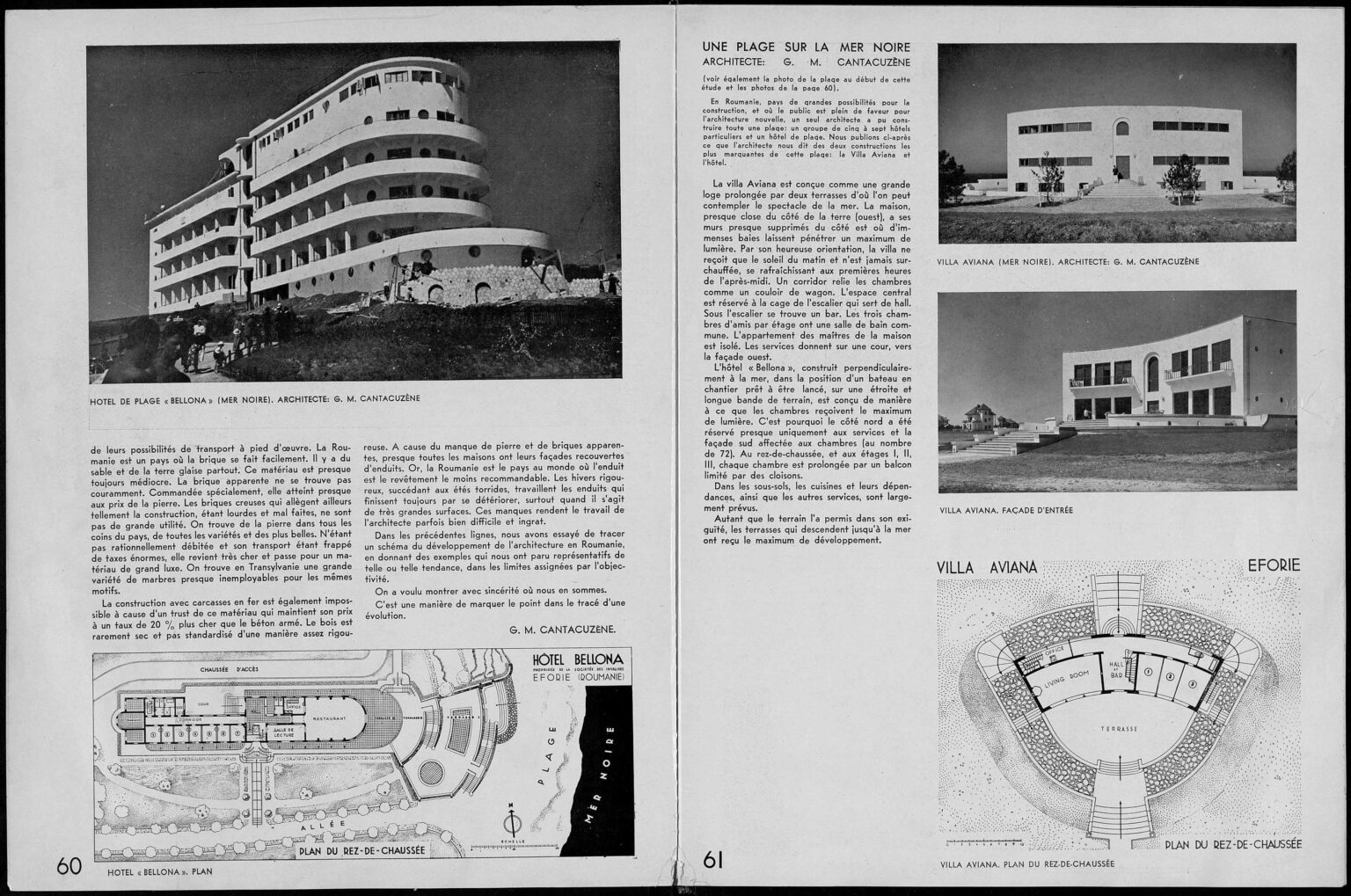
L'Architecture d'aujourd'hui, no. 5/1934, pages 60–61 · reproduction: National Institute of Heritage
1937 — 1938 · luxury hotel
Neamul Românesc, 10 august 1938
In July 1937, a newspaper described it as a huge four-storey ship whose prow, a concrete terrace, runs straight into the sea. Season reports mentioned the hotel’s terraces and lobby as a meeting place of the resort.
The Encyclopaedia of Romania, in the volume published in 1938, names two luxury hotels in Eforia: Bellona and Neptun. The building stands at right angles to the shore, and the rooms face south and east, from wide balconies, towards the sea.
1940 — 1948
1948
In July 1940, advertisements announced that the Neptun and Bellona hotels were open and running as usual. A year later, the veterans’ society offered its seaside sanatoriums for the care of the wounded.
After the war came nationalisation. Architect George Matei Cantacuzino was imprisoned between 1948 and 1954 and died in 1960. His building remained on the seafront, but lost its name.
The 1950s
1955
On the postcards of the decade, the name Bellona disappears. The building appears first as “Eforie – The Sanatorium”, with a People’s Republic slogan on the roof, then as the “Black Sea” Rest House. In 1958, the magazine Arhitectura was already writing about “the former Belona hotel”.
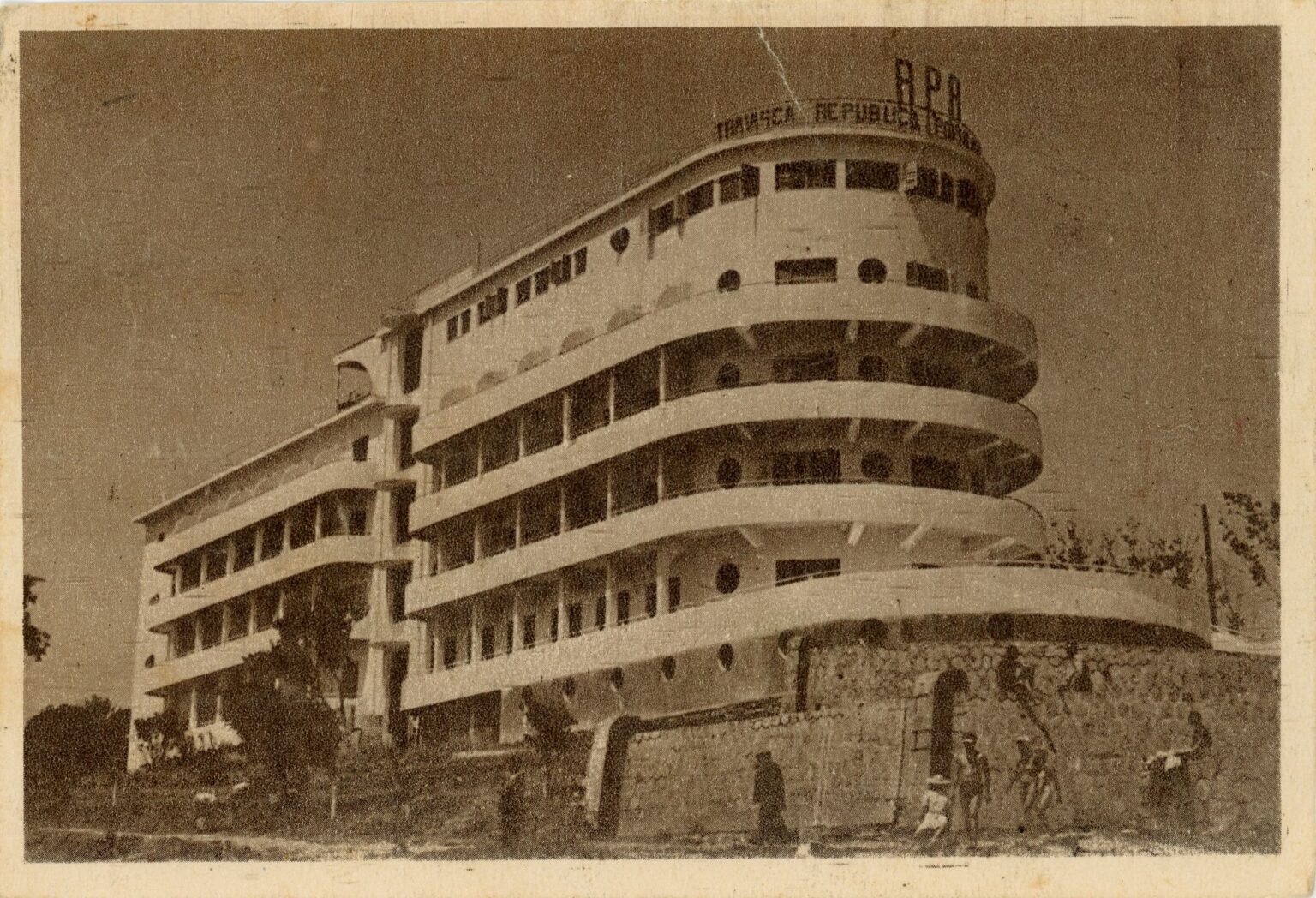
“Eforie – The Sanatorium”, postcard mailed on 5 August 1955 · Andrei Ștomff Collection / INP, CC BY-SA 4.0
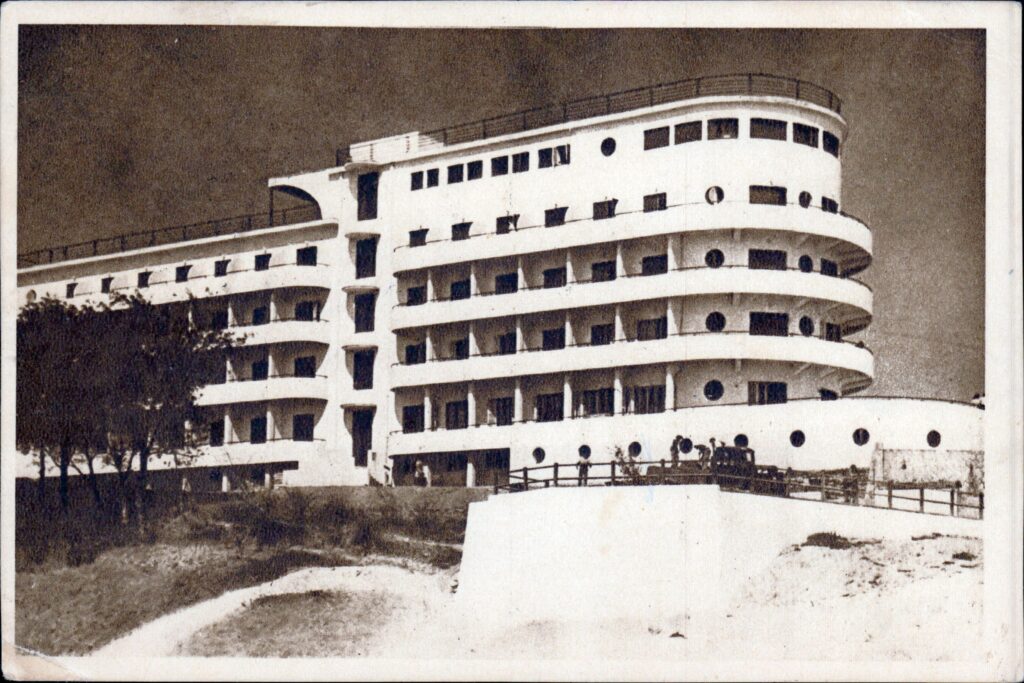
“Eforie – ‘Black Sea’ Rest House”, mailed on 18 August 1957 · Andrei Ștomff Collection / INP, CC BY-SA 4.0
The 1960s and 1970s
1969
Towards the end of the 1960s, the name returns to the postcards: first “Vila Belona”, then “Hotelul Belona”, now with a single l. The colour postcards show a crowded beach and the white silhouette above it, while the resort’s new hotels rise behind.
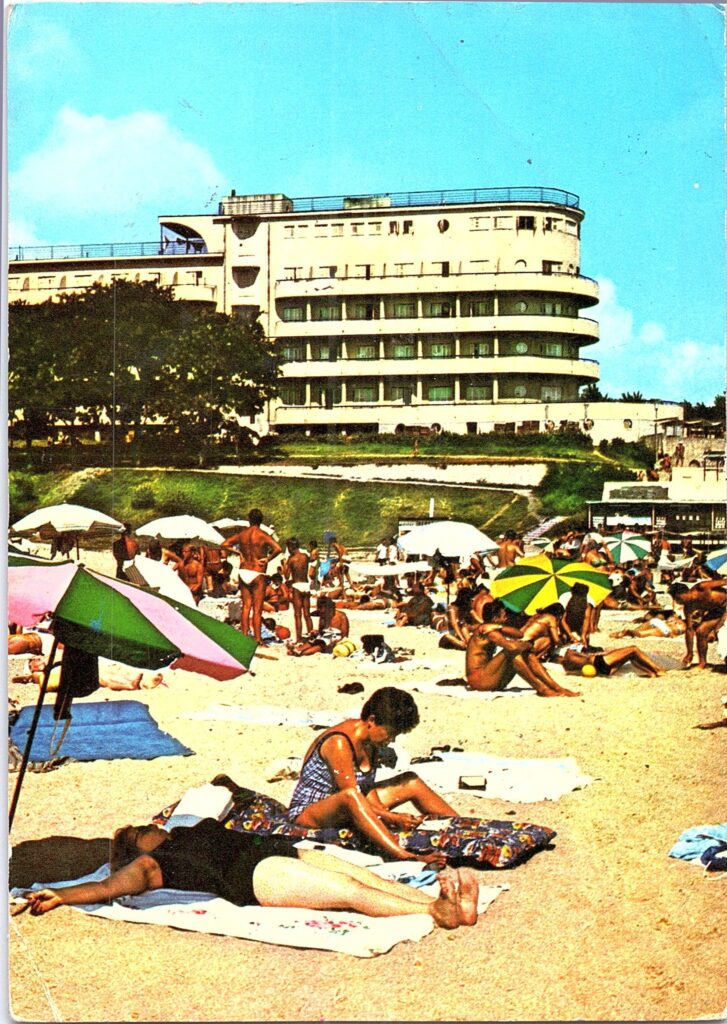
1969 · «Eforie Nord. Vila Belona»
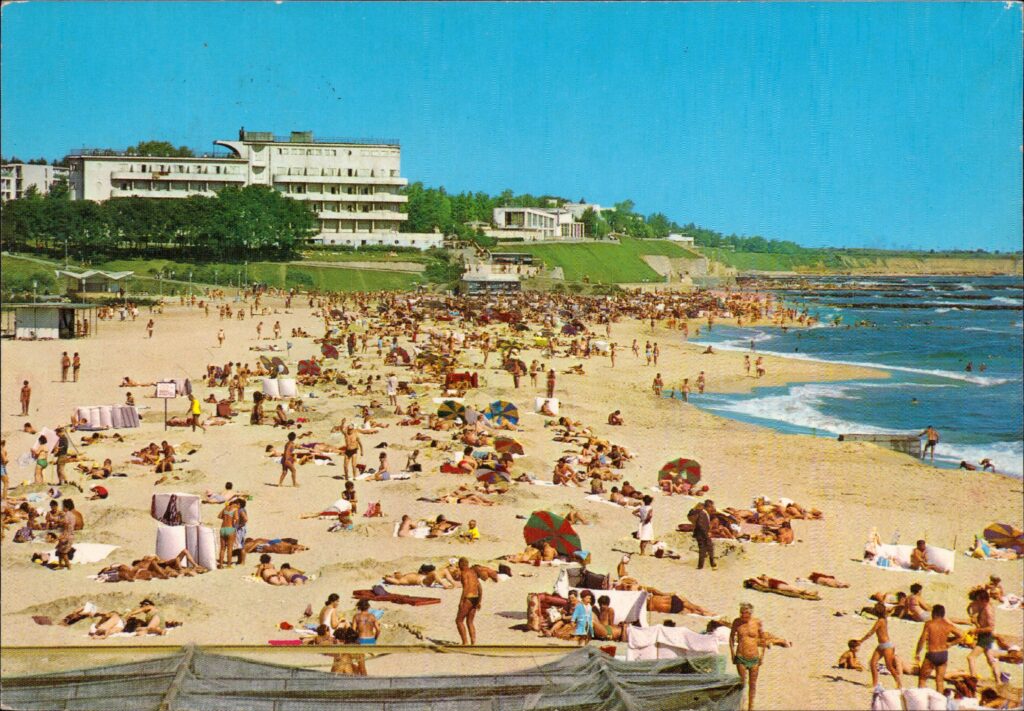
1973 · «Eforie – Plaja și hotelul Belona», Editura pentru Turism
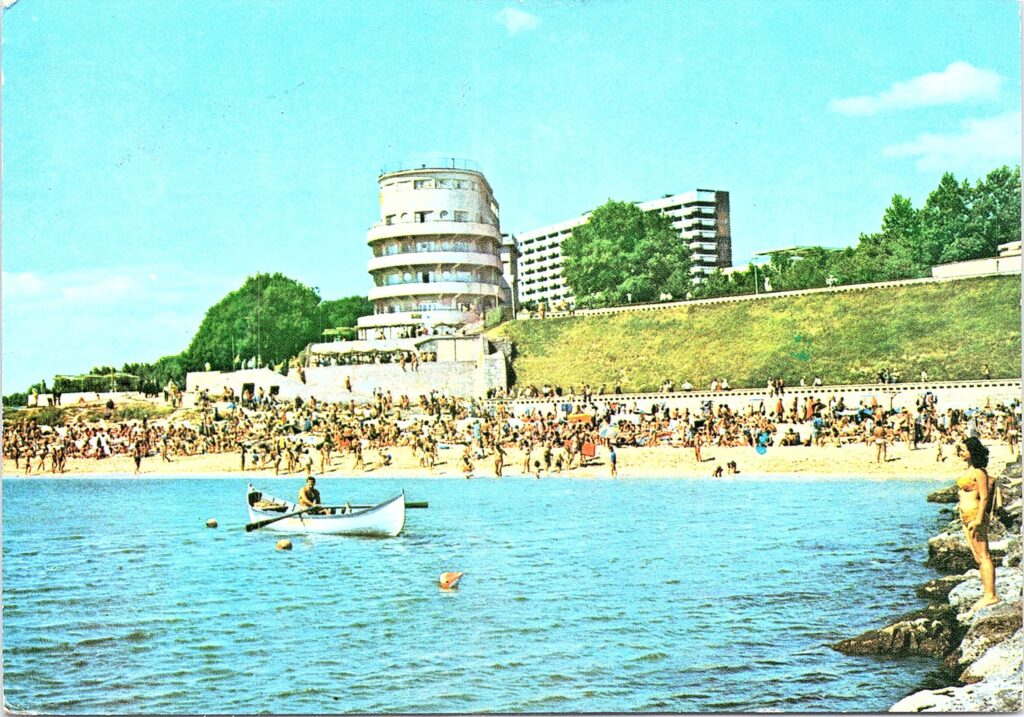
1975 · «Eforie Nord. Vila Belona»
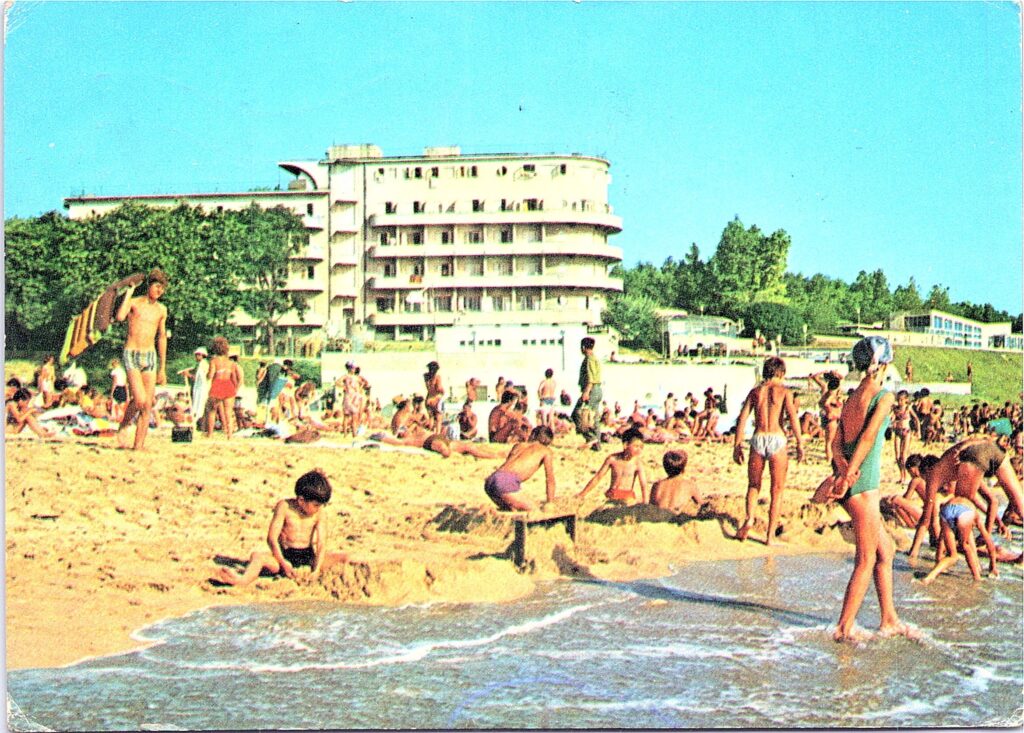
1976 · «Eforie Nord. Hotel Belona», Editura Meridiane, photo I. Oprea
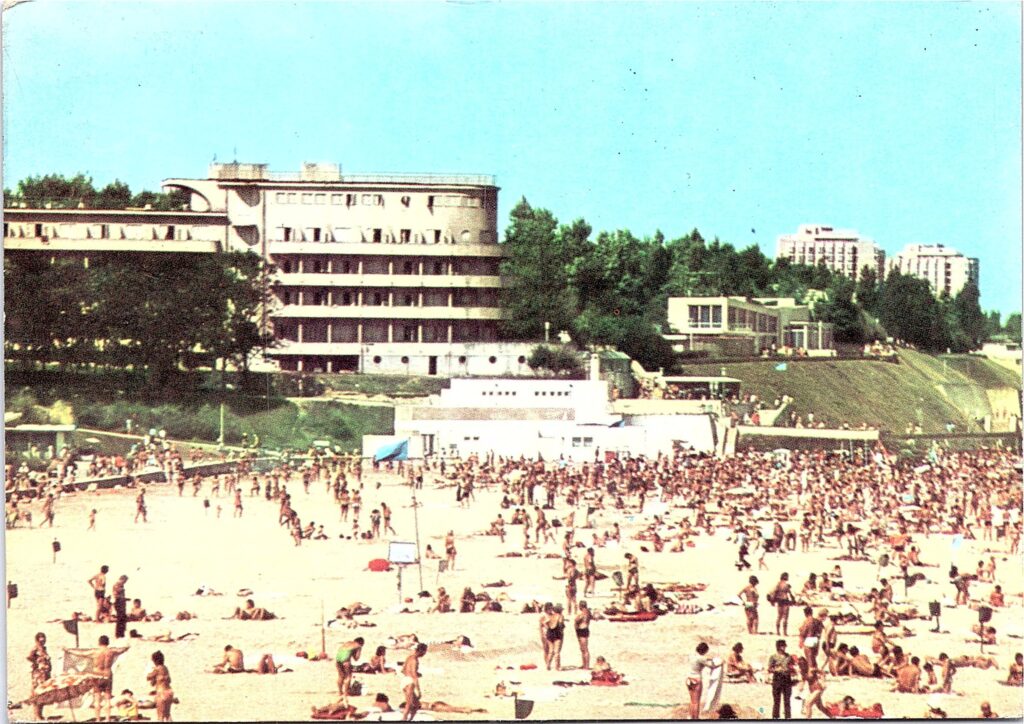
1978 · «Eforie Nord. Plaja Belona»
The year is the year of mailing. Postcards from the Andrei Ștomff Collection / National Institute of Heritage, CC BY-SA 4.0.
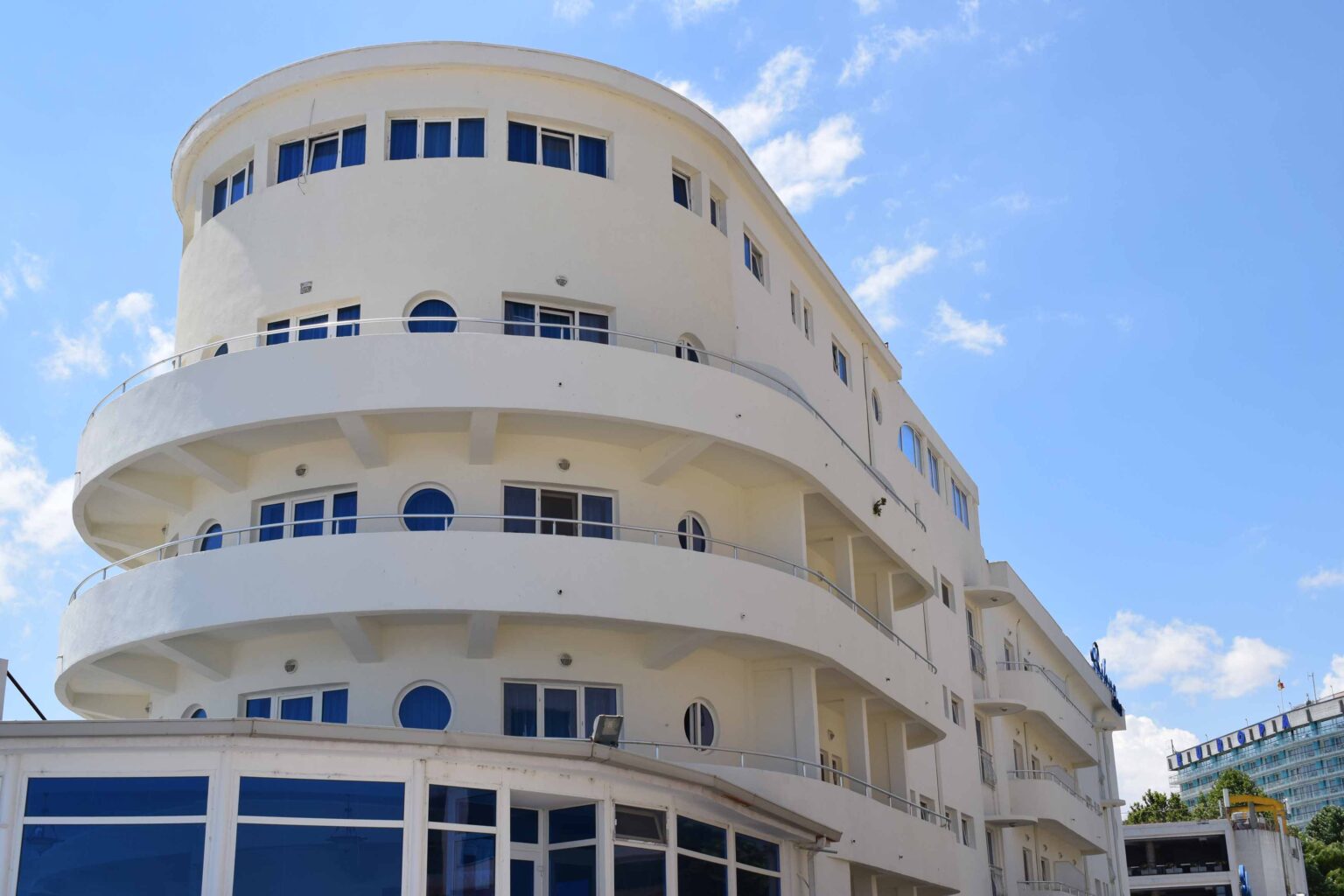
Hotel Belona seen from the beach, 2022 · Archive of the National Institute of Heritage
today
Hotel Belona is a Grade A historic monument, the category of monuments of national value, listed in the List of Historic Monuments under code CT-II-m-A-02880. The National Institute of Heritage calls it an architectural and urban landmark of this part of the coast.
It has been through several renovations and still welcomes its guests on the same seafront, with its balconies turned to the sea. Today’s rooms are on the home page; more stories about the building and the resort are in the ship’s log.
Book a room